
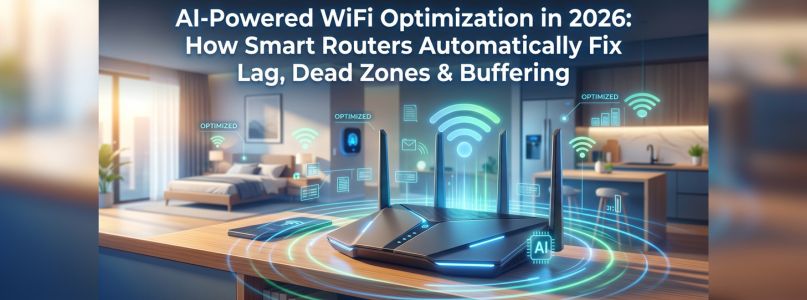
Home internet usage has changed dramatically in recent years. In 2026, households now depend on high-speed wireless connectivity for:
- Remote work
- 4K and 8K streaming
- Online gaming
- Smart home automation
- Video conferencing
- AI-powered devices
As the number of connected devices continues growing, traditional routers often struggle to maintain stable performance. This is where AI-powered WiFi optimization is transforming modern networking.
Today’s smart routers can automatically:
- Detect lag
- Reduce buffering
- Eliminate dead zones
- Prioritize bandwidth
- Optimize device connections in real time
Instead of relying on manual troubleshooting, AI-based systems now continuously analyze network activity and make automatic adjustments for better performance.
This guide explains how AI-powered WiFi optimization works in 2026 and why smart routers are becoming essential for modern homes.
What Is AI-Powered WiFi Optimization?
AI-powered WiFi optimization uses:
- Artificial intelligence
- Machine learning
- Real-time traffic analysis
- Automated network management
To improve wireless performance automatically.
The router constantly studies:
- Device behavior
- Signal quality
- Internet traffic
- Congestion patterns
Then adjusts settings instantly to maintain better performance.
Why Traditional Routers Struggle in 2026
Modern homes contain far more connected devices than ever before.
Typical households now use:
- Smartphones
- Smart TVs
- Gaming consoles
- Security cameras
- Voice assistants
- Smart appliances
- Work laptops
- Tablets
Older routers were never designed for this level of demand.
Common Home WiFi Problems
Many users experience:
- Slow internet during evenings
- Video buffering
- Gaming lag spikes
- Weak signal areas
- Smart device disconnects
- Delayed video calls
AI-powered optimization helps solve these problems automatically.
How AI Improves WiFi Performance
AI-enabled routers continuously monitor:
- Device usage
- Signal interference
- Congestion levels
- Network speed patterns
The system then makes real-time changes without user intervention.
Automatic Channel Optimization
One of AI’s biggest advantages is automatic channel management.
Traditional routers often remain stuck on congested WiFi channels.
AI systems can:
- Detect crowded channels
- Switch frequencies automatically
- Reduce interference instantly
This improves stability significantly.
Smart Band Steering Technology
Modern routers now intelligently move devices between:
- 2.4GHz
- 5GHz
- 6GHz bands
AI determines which band offers:
- Better speed
- Lower congestion
- Stronger signal
This reduces buffering and improves device performance.
AI Traffic Prioritization Reduces Lag
AI routers recognize which devices need priority.
For example:
- Gaming consoles receive low latency
- Video calls receive stable bandwidth
- Streaming devices receive smoother playback
Less important traffic gets deprioritized automatically.
AI Helps Eliminate Dead Zones
Dead zones remain a major issue in larger homes.
AI mesh systems now:
- Analyze signal strength continuously
- Optimize satellite communication
- Adjust backhaul performance automatically
This creates more stable whole-home coverage.
Gaming Performance Benefits
Gamers benefit heavily from AI networking.
AI routers help by:
- Reducing ping spikes
- Managing traffic congestion
- Prioritizing gaming packets
- Lowering latency during peak usage
This improves competitive gaming stability significantly.
Streaming Optimization Is Smarter Than Ever
Streaming platforms now require massive bandwidth.
AI systems can detect:
- Buffering risk
- Resolution changes
- Network slowdowns
The router automatically adjusts traffic handling to reduce interruptions.
Smart Home Device Management
Modern homes may contain:
- 50+ IoT devices
- Cameras
- Sensors
- Smart thermostats
- Voice assistants
AI networking systems improve communication between these devices more efficiently than traditional routers.
Predictive Network Adjustments
AI systems learn user behavior patterns over time.
For example:
- Heavy streaming hours
- Gaming schedules
- Work-from-home traffic periods
The router prepares bandwidth allocation proactively before congestion starts.
Interference Detection Is More Advanced
AI-powered routers can identify:
- Microwave interference
- Neighboring WiFi congestion
- Bluetooth conflicts
- Signal overlap
The system then adjusts settings automatically to maintain stronger performance.
Smartphone Apps Simplify Control
Most smart routers now include apps that allow users to:
- Monitor performance
- View connected devices
- Pause connections
- Run AI optimization scans
Users receive recommendations instantly.
AI Energy Management Is Improving Efficiency
Some advanced routers now optimize:
- Power consumption
- Signal transmission strength
- Device wake schedules
This improves efficiency while maintaining strong connectivity.
Why AI Networking Is Growing Rapidly in 2026
Several trends are accelerating adoption:
- More remote work
- WiFi 7 expansion
- Smart home growth
- Cloud gaming
- AI assistants
- Higher streaming quality
Traditional networking methods are no longer enough for many households.
Common Mistakes Users Still Make
Even with AI systems, users often:
- Place routers poorly
- Ignore firmware updates
- Overload networks
- Use outdated devices
Proper placement and maintenance still matter.
Tips to Improve AI WiFi Performance Further
✔️ Place Router Centrally
Avoid corners and enclosed spaces.
✔️ Keep Firmware Updated
AI systems improve continuously through updates.
✔️ Separate Smart Home Devices
Dedicated IoT networks improve stability.
✔️ Use Mesh Systems for Larger Homes
AI mesh systems handle roaming more effectively.
WiFi 7 Is Accelerating AI Networking
WiFi 7 introduces:
- Multi-Link Operation
- Faster channel switching
- Lower latency
- Better multi-device handling
AI optimization works especially well with WiFi 7 hardware.
AI Routers Are Becoming More Autonomous
Future routers may soon:
- Diagnose internet problems automatically
- Contact ISPs directly
- Predict hardware failures
- Self-adjust advanced settings
Networking is becoming increasingly automated.
Signs You May Need an AI Router Upgrade
Consider upgrading if:
- Lag happens daily
- Streaming buffers constantly
- Smart devices disconnect frequently
- Dead zones persist
- Gaming latency spikes regularly
AI-powered systems handle modern network demands much better.
Benefits of AI WiFi Optimization
✔️ Better Streaming Quality
Reduced buffering and smoother playback.
✔️ Lower Gaming Latency
More stable online gaming.
✔️ Improved Smart Home Reliability
Fewer disconnects for IoT devices.
✔️ Automatic Performance Tuning
Less manual troubleshooting required.
Future of Smart Networking
Experts expect AI networking to become standard in:
- Homes
- Offices
- Smart buildings
- Industrial environments
Future systems will become even more predictive and self-managing.
Final Thoughts
AI-powered WiFi optimization is changing home networking in 2026 by automatically fixing lag, buffering, dead zones, and network congestion in real time. Smart routers now use machine learning and advanced traffic management to improve connectivity for gaming, streaming, smart homes, and remote work environments.
As internet demands continue increasing, AI networking systems are becoming one of the most important upgrades for modern households seeking stable, high-performance wireless connectivity.
With WiFi 7 expansion and growing smart home adoption, AI-powered routers will continue shaping the future of faster, smarter, and more reliable internet experiences