
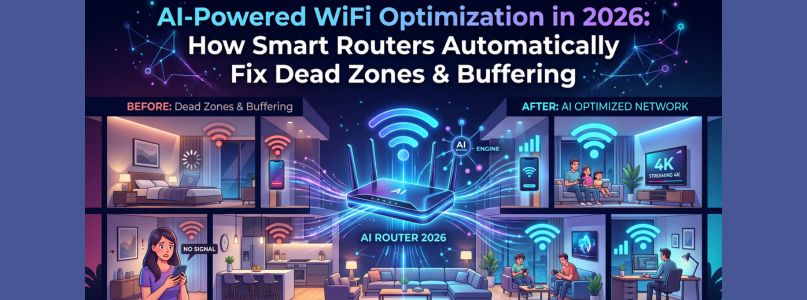
Home WiFi optimization networks have become far more complex in 2026 than ever before. Modern households now rely on dozens of connected devices including smart TVs, gaming consoles, AI assistants, security cameras, laptops, smartphones, and cloud-based smart home systems. As a result, users increasingly face frustrating problems such as:
- Dead zones
- Video buffering
- Slow downloads
- Gaming lag
- Weak signal areas
- Smart device disconnects
Traditional routers often struggle to handle these growing networking demands efficiently. Fortunately, a new generation of AI-powered routers is transforming home networking by automatically optimizing WiFi performance in real time.
Modern smart routers now use artificial intelligence to:
- Detect weak coverage areas
- Reduce congestion
- Prioritize important traffic
- Optimize signal strength
- Improve device roaming
- Automatically fix buffering problems
This article explains how AI-powered WiFi optimization works in 2026 and why smart routers are becoming essential for modern connected homes.
Why WiFi Problems Are Increasing in 2026
Today’s homes contain significantly more connected devices than previous years. Modern networks commonly support:
- WiFi 7 smartphones
- 8K streaming devices
- Smart TVs
- Gaming systems
- Video conferencing setups
- Smart security systems
- IoT appliances
- Cloud-based AI assistants
Each connected device consumes bandwidth and increases network complexity.
As traffic grows, traditional routers often struggle to distribute WiFi coverage evenly throughout the home.
What Is AI-Powered WiFi Optimization?
AI-powered WiFi optimization uses machine learning algorithms and real-time network analysis to automatically improve wireless performance.
Instead of relying on manual settings, AI-enabled routers continuously monitor:
- Device behavior
- Signal strength
- Traffic patterns
- Congestion levels
- Interference sources
- Roaming activity
The router then automatically adjusts network settings to improve performance without requiring user intervention.
How AI Routers Fix Dead Zones
Dead zones are areas where WiFi signals become weak or unstable. Traditional routers often fail to adapt when:
- Devices move around the home
- Walls block signals
- Network traffic changes
- Interference increases
AI-powered systems solve this problem by:
- Dynamically adjusting signal output
- Optimizing antenna direction
- Redirecting traffic intelligently
- Improving mesh communication
- Rebalancing connected devices
Some advanced routers even detect user movement patterns and optimize signal coverage proactively.
Intelligent Band Steering Improves Performance
Modern routers now support:
- 2.4GHz
- 5GHz
- 6GHz bands
AI-powered band steering automatically places devices on the most efficient frequency based on:
- Device capability
- Distance from router
- Current congestion
- Bandwidth demand
For example:
- Smart TVs may shift to high-speed 6GHz
- IoT devices may remain on 2.4GHz
- Gaming systems may prioritize low-latency bands
This intelligent traffic balancing dramatically improves network stability.
How AI Reduces Video Buffering
Streaming services now consume enormous bandwidth due to:
- 4K streaming
- 8K content
- Cloud gaming
- Live video platforms
AI-powered routers reduce buffering by:
- Prioritizing streaming traffic
- Detecting bandwidth spikes
- Reducing unnecessary background traffic
- Optimizing packet delivery
This allows smoother streaming even when multiple users are online simultaneously.
AI Traffic Prioritization for Gaming
Gaming requires:
- Stable latency
- Fast packet delivery
- Minimal jitter
AI-enabled routers can automatically identify gaming traffic and prioritize it over:
- Downloads
- Cloud backups
- Software updates
- Streaming traffic
This reduces:
- Ping spikes
- Input delay
- Match disconnects
- Voice chat lag
Competitive gamers increasingly rely on AI-powered networking systems for smoother gameplay.
Smart Mesh Systems Improve Whole-Home Coverage
Modern AI mesh systems continuously monitor:
- Satellite strength
- Device movement
- Network congestion
- Roaming behavior
The system then automatically:
- Redirects devices
- Optimizes backhaul communication
- Adjusts signal strength
- Prevents overcrowding
This creates seamless WiFi coverage throughout large homes.
AI Detects and Avoids Network Interference
Interference remains one of the biggest causes of WiFi instability.
Common interference sources include:
- Microwaves
- Bluetooth devices
- Neighboring WiFi networks
- Smart appliances
- Wireless speakers
AI routers automatically scan for interference and switch channels dynamically to maintain stable connectivity.
Automatic Device Optimization
Modern households often contain:
- 50+ connected devices
- Legacy smart home products
- WiFi 7 devices
- Older IoT equipment
AI-powered systems identify device types and optimize performance individually. For example:
- Security cameras receive stable bandwidth
- Gaming devices receive low-latency routing
- Smart thermostats receive consistent connectivity
This improves overall network reliability significantly.
Why WiFi 7 Benefits from AI Optimization
WiFi 7 introduces advanced technologies such as:
- Multi-Link Operation (MLO)
- Faster roaming
- Advanced spectrum management
- Ultra-low latency communication
These features improve performance but also increase networking complexity.
AI helps manage WiFi 7 systems by automatically balancing traffic and reducing signal conflicts.
Predictive Network Management
Some AI routers now use predictive analytics to:
- Anticipate congestion
- Prepare for streaming spikes
- Optimize channels proactively
- Prevent network slowdowns before they occur
This allows networks to remain stable even during peak usage periods.
AI Security Features Are Improving Too
Modern AI-powered routers now provide:
- Threat detection
- Suspicious traffic monitoring
- Intrusion prevention
- Automatic device isolation
These features improve both:
- Network performance
- Cybersecurity protection
As smart homes become more connected, AI security tools are becoming increasingly important.
Benefits of AI WiFi Optimization
Major Advantages Include:
- Fewer dead zones
- Reduced buffering
- Lower gaming latency
- Better roaming performance
- Faster smart device response
- Automatic network tuning
- Improved reliability
Users no longer need advanced technical knowledge to optimize home networks manually.
Why Traditional Routers Struggle Today
Older routers were designed for:
- Limited device counts
- Basic streaming
- Simple browsing
Modern homes now require:
- Multi-device management
- Cloud synchronization
- Real-time gaming
- Smart home coordination
AI-powered systems adapt much more effectively to these demands.
Common Mistakes That Hurt WiFi Performance
Even AI routers perform poorly if users:
- Place routers in corners
- Ignore firmware updates
- Overload networks constantly
- Use outdated extenders
- Block routers with furniture
Good placement and regular maintenance still matter.
Future of AI Networking
Experts expect future AI routers to include:
- Self-healing mesh systems
- Automated troubleshooting
- Voice-controlled optimization
- Behavioral learning algorithms
- AI-based parental controls
- Smart energy management
Home networking will become increasingly automated over the next few years.
Why AI Optimization Matters More in 2026
Modern households depend heavily on stable internet for:
- Remote work
- Online education
- Smart security
- Streaming entertainment
- Cloud gaming
- AI assistants
Even short connectivity interruptions now affect daily life significantly.
AI optimization helps maintain smoother, faster, and more reliable connectivity across the entire home.
Final Thoughts
AI-powered WiFi optimization is transforming home networking in 2026 by automatically fixing dead zones, reducing buffering, improving gaming performance, and optimizing device connectivity in real time.
As modern homes continue adding more WiFi 7 devices, smart appliances, and cloud-connected systems, traditional routers are increasingly unable to manage network complexity efficiently.
Smart AI-powered routers now provide:
- Automatic signal optimization
- Intelligent traffic prioritization
- Dynamic channel management
- Better mesh communication
- Predictive congestion prevention
With AI-driven networking becoming more advanced every year, users can expect faster, more stable, and more intelligent WiFi performance throughout modern connected homes.